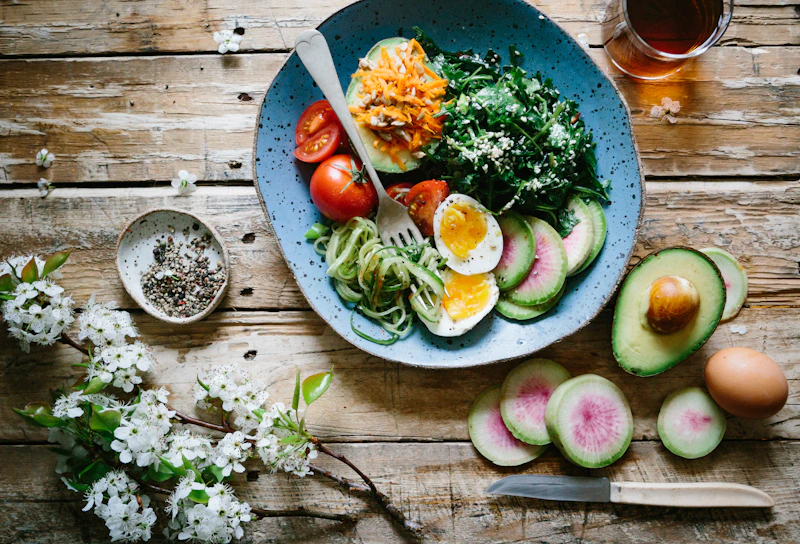
Healthy eating during and after GLP-1 therapy isn't about strict rules or eliminating food groups — it's about building a repeatable, satisfying pattern that supports your body while appetite, hunger cues, and daily calorie needs shift. The goal is a plate you enjoy, a routine you can maintain, and enough flexibility to fit real life.
This guide walks through the core plate template, macronutrient targets, food quality guidelines, sample days, and how to handle real-world situations from stress to social events.
Core Principles
- Protein-first at every meal — 25–40 g × 3–4 meals
- Plants at most meals — vegetables, fruit, legumes
- Whole-food carbohydrates — whole grains, potatoes, beans, fruit
- Healthy fats — olive oil, avocado, nuts, seeds, fatty fish
- Water first — hydration protects appetite regulation
- Consistency over perfection — a great week beats a great meal
- Flexibility — room for celebrations, social meals, and favorites
Macronutrient Targets
| Macro | Typical Target | Source Examples |
|---|---|---|
| Protein | 1.2–1.6 g / kg body weight | Chicken, fish, eggs, dairy, tofu, legumes |
| Carbohydrates | 40–50% of calories | Whole grains, fruit, legumes, starchy vegetables |
| Fat | 20–35% of calories | Olive oil, avocado, nuts, seeds, fatty fish |
| Fiber | 25–35 g / day | Vegetables, fruit, whole grains, legumes |
| Water | Half body weight (lb) in oz | Water, herbal tea, sparkling water |
Numbers vary with size, activity, and goals. Work with a dietitian for personalized targets.
The Plate Template
- Half the plate: vegetables and/or fruit
- Quarter of the plate: protein (palm-sized)
- Quarter of the plate: whole grain or starch (cupped-hand portion)
- Thumb-sized: healthy fat
- Beverage: water or unsweetened
Food Quality Tiers
Eat Freely
- Vegetables (all types)
- Fruit (whole, not juiced)
- Legumes (beans, lentils, chickpeas)
- Whole grains (oats, quinoa, brown rice, barley)
- Lean proteins (chicken, turkey, fish, tofu, tempeh, eggs)
- Dairy or fortified plant milks
- Nuts and seeds (portioned)
- Herbs, spices, vinegars, mustard
Eat Regularly
- Lean red meat (beef, pork tenderloin, lamb)
- Cheese (portioned)
- Whole-grain bread, pasta, tortillas
- Olive oil, avocado oil
- Dark chocolate (small portions)
- Wine or beer (moderate)
Eat Occasionally
- Refined-grain breads, pastas, snacks
- Sweets, pastries, ice cream
- Fried foods
- Bacon, sausage, deli meats
- Sugary drinks
- Fast food
Sample Days
1,800 kcal / 130 g Protein Day
- Breakfast: Greek yogurt with berries, walnuts, and chia seeds (30 g)
- Lunch: Grilled chicken bowl with quinoa, roasted vegetables, olive oil–lemon dressing (35 g)
- Snack: Cottage cheese with pineapple (20 g)
- Dinner: Salmon, sweet potato, steamed broccoli, side salad (30 g)
- Evening: Small handful of almonds (15 g of nuts, ~4 g protein)
Vegetarian Day (~110 g Protein)
- Breakfast: 3-egg vegetable omelet + whole-grain toast (25 g)
- Lunch: Chickpea and quinoa bowl with feta, greens, and tahini (25 g)
- Snack: Greek yogurt with berries (20 g)
- Dinner: Tofu stir-fry with brown rice and broccoli (30 g)
- Evening: Protein shake + apple (15 g)
Low-Appetite Day (~90 g Protein)
- Breakfast: Protein smoothie (Greek yogurt + protein powder + banana + spinach) (30 g)
- Snack: Boiled egg + fruit (6 g)
- Lunch: Chicken and vegetable soup + whole-grain crackers (25 g)
- Snack: Cottage cheese + berries (15 g)
- Dinner: Grilled fish, rice, steamed vegetables (25 g)
Building Great Habits
- Choose 5–7 template meals you enjoy and rotate them
- Batch cook 2 proteins on the weekend
- Keep 3 fast breakfasts ready (yogurt bowl, smoothie base, overnight oats)
- Have grab-and-go snacks portioned in advance
- Plan one dining-out meal per week
- Reserve one meal per week for a new recipe or new food
- Review every 2–4 weeks and adjust
Hydration and Beverages
- Water is the default drink
- Sparkling water is a strong swap for soda or juice
- Unsweetened tea and coffee count toward hydration
- Limit sugary drinks to occasional
- Alcohol in moderation, not daily
- Drink water before and between meals — not overwhelming amounts with meals
Snacking Strategy
Snacks should support your day — not sabotage it. Best options:
- Greek yogurt with fruit
- Cottage cheese with cucumber or berries
- Hard-boiled eggs
- Cheese stick + apple
- Turkey roll-ups with cucumber
- Protein shake
- Edamame
- Small handful of nuts + a piece of fruit
- Whole-grain crackers with hummus
Dining Out
- Prioritize grilled or roasted proteins over fried
- Vegetables on the side (double them if possible)
- Sauces and dressings on the side
- Split large entrees
- Ask for whole-grain options when available
- Choose one indulgence — drink, appetizer, or dessert
- Water first — arrive hydrated
Mindful Eating Habits
- Slow down — put utensils down between bites
- Chew more thoroughly
- Eat without screens when possible
- Pause halfway through to check fullness
- Stop at "comfortably full" rather than "stuffed"
- Wait 15 minutes before deciding on seconds
Handling Cravings
- Wait 10 minutes — most cravings fade
- Drink water first — thirst mimics hunger
- Take a short walk
- Address the emotion, not the food (bored, tired, stressed?)
- Allow occasional planned indulgences to reduce cravings long-term
- Get enough sleep — undersleeping increases cravings dramatically
Nutrient Priorities to Watch
| Nutrient | Target | Sources |
|---|---|---|
| Calcium | 1,000–1,200 mg | Dairy, fortified plant milks, tofu, greens (details) |
| Vitamin D | 600–800 IU | Sun, fatty fish, fortified foods, supplements |
| Iron | 8–18 mg | Meat, beans, lentils, fortified grains |
| Magnesium | 310–420 mg | Nuts, seeds, whole grains, greens |
| B12 | 2.4 mcg | Meat, dairy, eggs, fortified foods |
| Potassium | 2,600–3,400 mg | Fruits, vegetables, beans, potatoes |
Special Considerations
- Diabetes: Monitor blood sugar; coordinate with your care team
- Kidney disease: Adjust protein, sodium, potassium, and phosphorus per your renal team
- High blood pressure: Follow a DASH-style pattern (DASH diet)
- Reflux: Smaller meals; watch trigger foods
- Vegan: Prioritize protein and B12; consider fortified foods and supplements
- Older adults: Higher protein target; slightly softer textures if chewing is limited
Common Healthy Eating Mistakes
- Cutting food groups instead of improving quality
- Chasing "clean" perfection instead of consistency
- Skipping breakfast (usually reduces protein and increases evening cravings)
- Under-eating protein
- Over-relying on packaged "diet" foods
- Assuming variety = healthy (a rotation of 5–7 great meals beats chaos)
- Forgetting to plan for social meals
References
- National Institutes of Health — Nutrition and Weight Management Research.
- American Diabetes Association — Standards of Care in Diabetes.
- Obesity Medicine Association — Nutrition During Anti-Obesity Therapy.
- Academy of Nutrition and Dietetics — Healthy Eating Guidelines.
- USDA MyPlate — Building a Healthy Eating Pattern.
The Bottom Line
Healthy eating after GLP-1s is a repeatable pattern — protein at every meal, plants at most meals, whole-food carbs and healthy fats to round it out, and enough flexibility to enjoy real life. It's a system, not a diet. Build it during medication, refine it after, and it will carry your results forward for years.
 Google Play
 Apple Store