A great meal plan isn't about elaborate recipes or restrictive rules. It's a repeatable system — simple templates, planned proteins, easy vegetables, and enough variety to stay interested. During and after GLP-1 therapy, when appetite and food noise shift, that system becomes the backbone of long-term results.
This guide walks through the plate template, a sample weekly plan, batch-cooking approaches, dining out strategies, and how to adapt for low-appetite days.
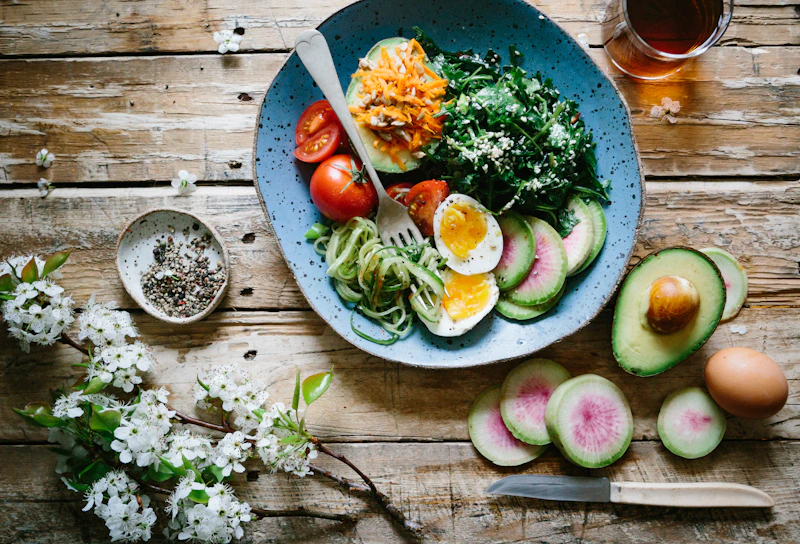
The Plate Template
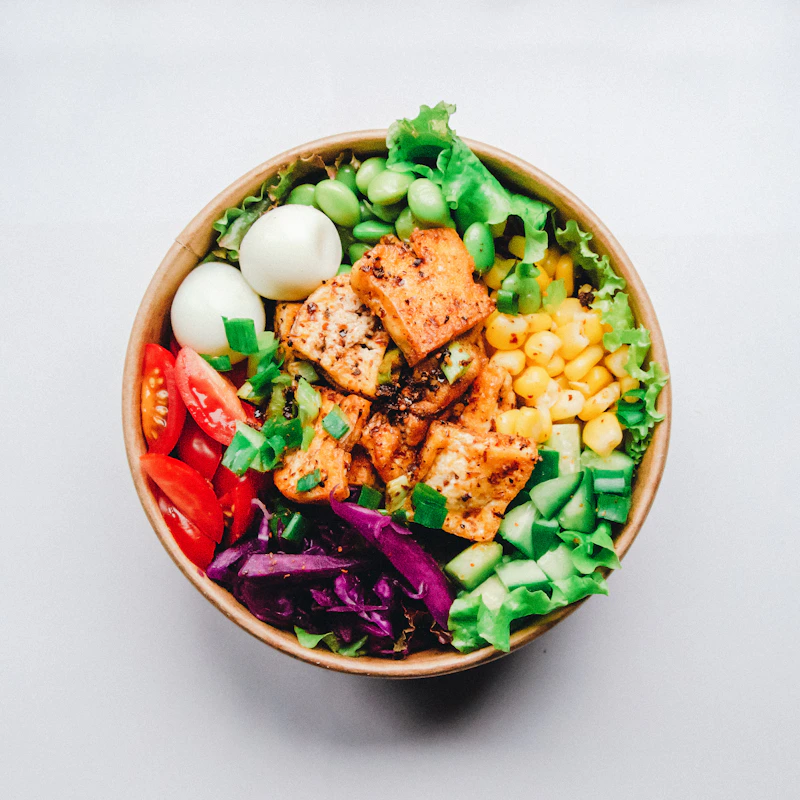
The simplest way to plan a meal — no math required:
- Protein — palm-sized portion (25–40 g). Chicken, fish, beef, tofu, tempeh, cottage cheese, Greek yogurt.
- Vegetables or Fruit — 1 to 2 cups. Roasted, raw, steamed, or sautéed.
- Whole Grain or Starch — cupped-hand portion. Quinoa, brown rice, sweet potato, oats.
- Healthy Fat — thumb-sized portion. Olive oil, avocado, nuts, seeds.
- Water or Unsweetened Beverage
Comparison: Plate Templates by Meal
| Meal | Protein | Veg/Fruit | Starch | Fat |
|---|---|---|---|---|
| Breakfast | Greek yogurt or eggs | Berries | Oats or toast | Nut butter or seeds |
| Lunch | Grilled chicken or tofu | Salad | Quinoa or rice | Olive oil dressing |
| Snack | Cottage cheese or shake | Fruit | — | Almonds |
| Dinner | Salmon or lean beef | Roasted vegetables | Sweet potato | Avocado slices |
Sample Weekly Meal Plan
Monday
- Breakfast: Greek yogurt with berries and chia seeds
- Lunch: Grilled chicken bowl (chicken, quinoa, roasted vegetables, olive oil–lemon dressing)
- Snack: Cottage cheese with a handful of almonds
- Dinner: Salmon, sweet potato, steamed broccoli
Tuesday
- Breakfast: 3-egg omelet with spinach and tomato + fruit
- Lunch: Chicken salad wrap in whole-grain tortilla + cucumbers
- Snack: Protein shake + banana
- Dinner: Turkey chili with beans over brown rice + side salad
Wednesday
- Breakfast: Oatmeal with protein powder, walnuts, and berries
- Lunch: Leftover turkey chili + salad
- Snack: Hard-boiled eggs + fruit
- Dinner: Stir-fried tofu with vegetables and brown rice
Thursday
- Breakfast: Greek yogurt parfait with granola and fruit
- Lunch: Tuna salad on greens with hummus and whole-grain crackers
- Snack: Cheese stick + apple
- Dinner: Grilled shrimp tacos with corn tortillas, cabbage, and avocado
Friday
- Breakfast: Smoothie with protein powder, banana, spinach, and almond butter
- Lunch: Chicken quinoa bowl with roasted vegetables
- Snack: Edamame
- Dinner: Sheet-pan lemon chicken with potatoes and green beans
Saturday
- Breakfast: Veggie egg scramble + whole-grain toast + fruit
- Lunch: Big salad with grilled protein and olive oil–lemon
- Snack: Cottage cheese with pineapple
- Dinner: Dinner out — grilled fish, vegetables, small side of rice
Sunday
- Breakfast: Overnight oats with protein powder, chia, and berries
- Lunch: Lentil soup + salad
- Snack: Greek yogurt + walnuts
- Dinner: Grilled steak with roasted sweet potato and broccoli
Batch Cooking Blueprint
Two hours on Sunday saves 8+ hours of cooking during the week.
- Cook 2 proteins — e.g., baked chicken breasts and a batch of turkey chili
- Roast 2 sheet-pans of vegetables — broccoli, sweet potato, peppers, onions
- Prep a whole grain — quinoa or brown rice
- Wash and cut raw vegetables — cucumber sticks, cherry tomatoes, bell peppers
- Portion out snacks — hard-boiled eggs, Greek yogurt cups, almonds in bags
- Blend a smoothie base — freeze portions for grab-and-go
Low-Appetite Meal Ideas
- Protein smoothie — Greek yogurt, protein powder, spinach, banana, almond butter
- Cottage cheese with berries and a boiled egg on the side
- Chicken and vegetable soup (protein-forward broth)
- Scrambled eggs with a slice of whole-grain toast
- Tuna packet with avocado and whole-grain crackers
- Ricotta bowl with fruit and honey
- Greek yogurt with granola (higher protein granola)
Dining Out Strategy
- Choose grilled or roasted proteins
- Ask for sauces and dressings on the side
- Double vegetables, skip fries when possible
- Split large entrees
- Order a protein-forward appetizer if entrees look heavy
- Choose one indulgence (drink OR appetizer OR dessert)
- Water first — arrive hydrated
Grocery List Blueprint
Proteins
- Chicken breasts
- Ground turkey or lean ground beef
- Salmon or white fish fillets
- Eggs
- Greek yogurt
- Cottage cheese
- Firm tofu or tempeh
- Canned tuna or salmon
- Protein powder
Vegetables and Fruit
- Leafy greens (spinach, kale, arugula)
- Broccoli, cauliflower, peppers, zucchini
- Sweet potato, regular potato
- Berries, apples, bananas, citrus
- Frozen mixed vegetables and frozen berries
Whole Grains
- Quinoa
- Brown rice or wild rice
- Rolled oats
- Whole-grain bread or tortillas
Healthy Fats and Pantry
- Olive oil, avocado oil
- Nuts and nut butter (unsalted or lightly salted)
- Chia and flax seeds
- Vinegars, mustard, lemons
- Herbs, spices, salt-free blends
Making It Sustainable
- Pick 5–7 template meals you actually like
- Rotate weekly rather than reinventing constantly
- Batch cook two proteins on the weekend
- Keep 3 fast breakfasts ready (yogurt, smoothie base, overnight oats)
- Plan one dining-out or takeout meal per week
- Reserve one meal per week for something new
- Review and adjust every 2–4 weeks
Common Meal Planning Mistakes
- Planning too many complex recipes
- Grocery shopping without a plan
- Skipping protein at breakfast
- Assuming variety = quality
- Not planning snacks (they happen either way)
- Forgetting to plan for dining out
- Cutting food quality when time is tight
References
- National Institutes of Health — Nutrition and Weight Management Research.
- American Diabetes Association — Meal Planning Guidelines.
- Obesity Medicine Association — Practical Meal Planning.
- Academy of Nutrition and Dietetics — Meal Planning Resources.
- USDA MyPlate — Building a Healthy Eating Pattern.
The Bottom Line
Great meal planning is boring in the best way — the same simple template, executed consistently, with a rotation of 5–7 template meals you enjoy. Protein at every meal, vegetables at most, whole grains and healthy fats to round it out, and a plan for dining out and low-appetite days. That's the system that carries results forward — during GLP-1 therapy, after it, and for the long haul.
 Google Play
 Apple Store